#ChariotMS & #ThinkHand: therapeutic lag explains why we don’t have treatments for progressive MS

We need to do longer studies in progressive MS #ChariotMS #ThinkHand


Summary: This post explains therapeutic lag and why people with more advanced MS don’t see an immediate response to DMTs.

I have been invited to give a grand round talk at Imperial College this morning. I have chosen the topic: “Is progressive MS (more advanced MS) modifiable?”.  This is an extension of our #ThinkHand campaign to get the wider neurological community to accept that MS is potentially modifiable throughout its course. Despite us posting and reposting about reserve capacity, therapeutic lag, MS being a length-dependent axonopathy and the asynchronous progressive MS hypothesis we still get questions such as: “Why don’t pwPPMS, or pwMS with an EDSS >6.0 respond, to HSCT and other DMTs?”


It is the same issue in relation to responders vs. non-responders to ocrelizumab in the PPMS trial. It is very difficult to know who is a responder and non-responder based on the current data from the ocrelizumab PPMS, or ORATORIO, trial. Why? Simply because clinical trials are designed, or powered, to get a significant read-out in a reasonable period of time. It doesn’t mean that if someone with PPMS does not stabilise, on a high-efficacy therapy, in say a period of 2 years is a non-responder. Because of therapeutic lag, it may take much longer to see a response to treatment, particularly in pwMS who are older and have less reserve capacity in the particular pathway (usually the legs) being assessed.

I often refer to the study below which showed that interferon-beta treatment, a moderate efficacy DMT, would probably work in PPMS provided the follow-up is long enough; in this case 7 years. In this study PwPPMS who had only been treated with IFNbeta for 2-years clearly did better at 7-years than those people treated on placebo over the same period of time. There was a lag in the impact of interferon-beta on the outcome.

Why a lag? One interpretation is that the impact of anti-inflammatory medications in progressive MS may take several years to play out. In other words progression in someone with PPMS over the next 2 years was primed by inflammation from years ago. Suppressing inflammation today will have no impact over the next 2-years as the damage priming progression over the next 2 years has already occurred. All anti-inflammatory therapies will have a lag in terms of showing a treatment response in progressive MS.

Does this make sense?

To illustrate this concept I drew the picture below, which has now been published in our length-dependent axonopathy paper. Importantly in this study, the actively-treated subjects (INF-beta) only did better than placebo-treated subjects in terms of upper limb function (9HPT), cognition and brain volume loss. There was no difference in terms of the EDSS and T25FW, which assess lower limb. The reason why there was no difference in lower limb function is almost certainly due to loss of reserve, i.e. too many nerve fibres supplying the limbs had been damaged already for an anti-inflammatory to make a difference. The other issue is that in this study the treatment period was too short. Please note this study is only one of many studies showing the same effect, a greater impact of anti-inflammatory therapies on upper limb, compared to lower limb, function and is one of the reasons we are running our #ThinkHand campaign and trying to get support for our CHARIOT-MS study.

In the ocrelizumab PPMS, ORATORIO, trial the treatment effect was almost double in the arms compared to the legs. This is why I have little doubt that ocrelizumab is effective in PPMS. If the trial was extended for longer the treatment effect on lower limb function will have gotten greater simply because of lag; survival or Kaplan-Meier curves diverge further with time.


I am convinced we are correct about ‘therapeutic lag’ and the MS community is beginning to take this it into account when designing progressive MS trials. This means being clever about our studies and getting the regulators to accept the 9HPT as a primary outcome measure. The MS community has made it clear that they value arm and hand function more than leg function, we now need the wider community to help get this message across. There is also an economic argument for taking DMTs into wheelchair users to protect upper limb function; once people lose their arm function they lose their independence and the costs, both medical and social, for looking after these become very high. 

Just imagine what happens to your self-esteem and quality of life when you can’t transfer your self from your wheelchair to the toilet and need a carer to help you go the toilet? When we asked people with MS what hand and arm function they valued most many pwMS stated being able to go the toilet without help.

As you can see we will continue to make the case for doing trials in more advanced MS. This is why we need your help getting the CHARIOT-MS trial funded.  The CHARIOT-MS study will compare subcutaneous cladribine to placebo in subjects with more advanced MS (EDSS 6.0 to 8.0), using the 9-hole peg test as the primary outcome measure.

If you are a wealthy philanthropist reading this post? DrK (@KlausSchmierer) is looking for a large donation of ~£2M to support his application to the NIHR for the CHARIOT-MS study. He needs to bring the costs of the study for NIHR down to under £2.5M to have any chance of getting this trial funded and to help people with more advanced MS.

Tur et al. Interferon Beta-1b for the Treatment of Primary Progressive Multiple Sclerosis: Five-Year Clinical Trial Follow-up. Arch Neurol. 2011 Nov;68(11):1421-7.

OBJECTIVES: To investigate, during the 5-year period without treatment after termination of a 2-year clinical trial of interferon beta-1b for the treatment of PPMS.

MAIN OUTCOME MEASURES: After 5 years without treatment, the EDSS and MSFC measures were scored for 63 and 59 MSers, respectively. Neuropsychological and magnetic resonance imaging assessments were performed for 59 and 50 MSers, respectively.

EDSS = Expanded Disability Status Scale

MSFC = MS Functional Composite ( a composite 3 tests the PASAT, 9-hole peg test and the timed 25-ft walk)

9-Hole Peg Test = test of upper limb function

Word List Generation Test = cognitive task

RESULTS: After 5 years without treatment, the interferon beta-1b group had better 9-Hole Peg Test (p=0.02) and Word List Generation Test (p<0.001) scores, and MRI measures in the normal-appearing white matter were significantly better. During the entire study period (from trial baseline to assessment at 5 years without treatment), the placebo group showed a greater decrease in brain volume (p=0.004). The in-trial increase of lesions correlated with the worsening of the EDSS score during the 5-year period without treatment (p =0.004).

CONCLUSIONS: Modest but beneficial effects of interferon beta-1b on clinical variables and brain atrophy development were observed 5 years after trial termination. Moreover, in-trial lesion activity correlated with EDSS progression after trial termination. Therefore, we provide evidence to consider immunomodulation as a sensible approach to treat primary progressive multiple sclerosis.

CoImultiple

#ChariotMS & #ThinkHand: is it ever too late to treat MS?

It is never too early, nor too late, to treat MS. #Never2EarlyNor2Late #ChariotMS #ThinkHand

Summary: This post makes a case for a new treatment philosophy at Barts-MS based on the principle that “It’s never too early, nor too late, to treat MS”. The post also describes the influence of the London Underground, or tube, on our thinking about MS. This post is longer than usual and no summary can do it justice so please take the time to read it in full. Thank you.

What has the tube, or London Underground, have to do with MS? My rendition of London Underground map to explain the MS journey should come to mind. I was recently told that my published, earlier, version has achieved iconic status as it is frequently used by other people in their presentations. It is a pity because things have moved on since I created the published version. Firstly, it depicts MS as a one-way journey that starts in the at-risk period and terminates in death valley. Another negative is that it is an all or nothing picture; it is not layered, it is not subtle. You may have noticed that I often show the MS tube map with a cut onion; if you peel an onion too fast it is going to make you cry. My ultimate aim is to produce a fold-out MS tube map that will allow you to unfold the journey one segment at a time. In this way, you can look at one part of the MS journey at a time. Secondly, my latest version of the map has become very dense with many additional lines and one line that is still under construction. This under construction line, or the dotted grey line, is the one that leads to long-term remission, a cure and normal ageing. It is under construction because the data is yet to emerge showing we can cure MS. I added this line to give people with MS hope and to make the point that the journey is not necessarily a one-way journey. Other add-ons to the map that I am particularly proud of include the co-morbidity, lifestyle and wellness lines. These illustrate the importance of managing MS holistically. Despite its limitations and criticisms, I maintain that the MS tube map creates a framework for laying out what MS is for people with the disease. Healthcare professionals can also use the map as a reference point to help them pigeonhole their knowledge and for explaining MS to their patients.

What about the criticisms? The cynics, and trolls, never miss an opportunity to take a punt at me and say that I created the MS tube map on behalf of Pharma to promote the prescribing of DMTs. The truth is that Pharma has never had a say in its content. The only reasons DMTs are a large part of the map is because there has been an explosion in the number of DMTs available to treat MS and with this, the complexity of treating MS has increased.

Please note the MS tube map will never be complete. It needs to evolve and improve. So if you have any ideas about improving it please drop me an email (bartmsblog@google.com).


The real reason for penning this post is that DrK and I had a discussion on the tube last night about MS (yes, DrK and I are typical Londoners – we commute to and from work on the underground). Our discussion revolved around the observation that we as a group at Barts-MS are pushing two messages that may seem incongruent. (1) To treat early to prevent damage from occurring in the first place, but also (2) to treat late as there is always some neurological function to preserve. This led us to come up with a new slogan:


“It’s never too early, nor too late, to treat MS!” 

or in eSpeak 

#Never2EarlyNor2Late

What do we mean by this? It is clear that people with active MS do better with early access to treatment compared to delayed access to treatment. Similarly, people with MS treated with highly-effective treatments early (rapid-escalation or flipping the pyramid) do better than those who are started on less effective treatments first and escalated if necessary to highly effective therapies later (slow stepwise approach). However, even the former approach may not be early enough. We know that a significant number of people presenting with clinically isolated syndromes (CIS) already have substantial damage. Therefore we really need to define early, as being even earlier, and try and identify people in the asymptomatic phase of the disease, or in the at-risk period of MS, and treat them to prevent them getting MS in the first place. I am also very keen that we expand the diagnostic criteria of MS to include RIS (radiologically isolated syndrome) as part of the treatable MS spectrum. Approximately, 25% of RIS patients already have significant cognitive impairment. Why would we not want to treat these patients and prevent further damage?

It is never too late. At the moment all the trials that have led to licensed DMTs have excluded patients who are wheelchair users. The consequences of this are that many international guidelines, including NHS England guidelines, require us to stop DMTs once a patient reaches EDSS 7.0. We know this is wrong. We have emerging evidence that treatments still work in more advanced MS and slow down the progression of the disease in neuronal systems that still have reserve capacity, for example, the arms, speech and swallowing. Our #ThinkHand campaign’s main aim is to raise awareness about this issue and to get the MS community to take the preservation of upper limb function seriously. What we need is class 1 evidence (randomised-controlled trials) of the effect of DMTs on upper limb function in people with more advanced MS. This is why we are trying to get funding in place for our CHARIOT-MS study. The CHARIOT-MS study will tell us if subcutaneous cladribine, given to patients with more advanced MS (EDSS 6.0 to 8.0), will delay the inevitable loss of function of the upper limbs. Please note that Pharma has no interest in funding this trial; the liquid formulation of cladribine is generic and hence there is no financial incentive in place for them to do this trial. You may ask what about Mavenclad, the licensed oral formulation of cladribine? Unfortunately, the patent life on the oral formulation is too short; by the time a study in more advanced MS is done Mavenclad is likely to be generic.

In parallel to the CHARIOT-MS trial, we will continue to lobby Pharma. In my opinion, the four best agents, apart from Mavenclad, to test in more advanced MS are natalizumab, alemtuzumab, ocrelizumab and ofatumumab. Please note these are all high efficacy therapies. Insights that have led us to design the CHARIOT-MS study come from the ASCEND (natalizumab in SPMS) and ORATORIO (ocrelizumab in PPMS) trials. These studies indicate that we probably need a high efficacy therapy to make a difference in advanced MS. We are aware that Genzyme is developing a follow-on anti-CD52 monoclonal to replace alemtuzumab and Novartis have ofatumumab in phase 3 trials in RRMS. Therefore, which of the big guns, Genzyme, Biogen, Roche or Novartis are prepared to be bold and take-up the challenge of testing their drugs in more advanced MS? If anyone from one of these companies is reading this post can you please forward our message to the decision-makers in your companies?

Life tends to reward the bold, the risk-takers, and people who care. Which one of you cares enough about MS to take-up the challenge? The rewards of doing a study of this nature go way beyond economics. Can you imagine what the MS community will say about you as a company if you challenge the current dogma that ‘advanced MS is not modifiable’? One of the reasons for inviting so many company people as co-authors on our length-dependent axonopathy paper was to try and catalyse a change of thinking within your companies. We sincerely hope this is happening.

A softer and possibly easier option is to dig deep into your pockets and to make a large donation to DrK’s (@KlausSchmierer) CHARIOT-MS project. DrK is looking for a large donation to support his application to the NIHR for the CHARIOT study. He needs to bring the NIHR costs down to under £2.5M to have any chance of getting this trial funded.

DrK with a smile


Giovannoni et al. Is multiple sclerosis a length-dependent central axonopathy? The case for therapeutic lag and the asynchronous progressive MS hypotheses. Mult Scler Relat Disord. 2017 Feb;12:70-78.

Trials of anti-inflammatory therapies in non-relapsing progressive multiple sclerosis (MS) have been stubbornly negative except recently for an anti-CD20 therapy in primary progressive MS and a S1P modulator siponimod in secondary progressive MS. We argue that this might be because trials have been too short and have focused on assessing neuronal pathways, with insufficient reserve capacity, as the core component of the primary outcome. Delayed neuroaxonal degeneration primed by prior inflammation is not expected to respond to disease-modifying therapies targeting MS-specific mechanisms. However, anti-inflammatory therapies may modify these damaged pathways, but with a therapeutic lag that may take years to manifest. Based on these observations we propose that clinically apparent neurodegenerative components of progressive MS may occur in a length-dependent manner and asynchronously. If this hypothesis is confirmed it may have major implications for the future design of progressive MS trials.

CoI: multiple

#ChariotMS: what do we need to do to convince the community that more advanced MS is modifiable?

What needs to be done to tackle ‘progressive’ or more correctly ‘advanced’ MS? #ClinicSpeak #ThinkHand #ChariotMS

Summary: This post summarises what needs to be done to tackle more advanced MS including people with MS using wheelchairs. It makes the case for making several changes in the way we study advanced MS. What is needed now is a large injection of money to kick-start a trial in wheelchair users to delay loss of upper limb function. This post is an essential read for anyone who cares about people with more advanced MS. 

Earlier this week I had a debate with a colleague about therapeutic targets and whether or not they are achievable. He thought NEDA was a crap target as most of our patients who achieve NEDA still have residual problems. Therein lies the rub. NEDA, or no evident disease activity, refers to evidence of ongoing inflammation. NEDA does not refer to previous damage, nor does it refer to the ongoing consequences of previous damage. You can only do so much with an anti-inflammatory agent, i.e. switch-off inflammation, and even then most anti-inflammatory agents we use don’t switch-off innate immunity within the CNS (hot microglia), nor do they purge the nervous system of plasma cells and oligoclonal immunoglobulins. In reality, we can only ask so much of our current DMTs. This is why we need combination therapy strategies. 


The following are some points about progressive MS that needs repeating: 


  1. We all need to accept that ‘progressive MS’ is a misnomer. Progression means improvement. At Barts-MS prefer the term ‘advanced MS’ this captures the associated disability that comes with this phase of the disease.
  2. We need to accept that the pathology that drives neuroaxonal loss, or neurodegeneration (the pathological substrate that underlies ‘advanced MS’) as being there from the beginning. This means the neurodegenerative phase of MS is present from the beginning before pwMS become physically disabled.
  3. MS is 1-disease and not 2-3-or-4-diseases. As I have said before the false division of MS into several diseases is not backed up by science, nor by philosophical arguments. This false division of MS into many diseases has become counter-productive to the field of MS. The division of MS into relapsing and progressive forms was Pharma-led to get MS defined as an orphan disease, which allowed interferon-beta-1b to get a license based on the results of one pivotal phase 3 study. It also allowed the company concerned to charge rather a lot of money for its product. Overall this has been good for MS in that it has attracted a lot of Pharma interest and has supercharged drug development in MS, but it is now slowing down drug development and making it very expensive. We need cheaper drugs for advanced MS; disability affects the cost-effectiveness models for reimbursement hence DMTs for advanced MS need to be priced lower than those for relapsing forms of MS.
  4. Following on the point above the division between SPMS and PPMS is false. There is no pathological, genetic, imaging or other data that suggests these are different entities. We, therefore, should be doing trials in both populations simultaneously.
  5. Slay the dogma that more advanced MS has reduced inflammation, or is non-inflammatory. There are clinical, imaging and pathological data that shows inflammation plays a big part in driving advanced MS. Therefore not to target more advanced MS with an anti-inflammatory is folly.
  6. Accept that reserve capacity in particular systems plays an important part in how MS worsens. Neuronal systems with reserve are more likely to be able to recover function and hence show a treatment effect compared to neuronal systems in which reserve capacity is exhausted. In the latter systems, it will simply take longer to show a treatment effect; we refer to this as therapeutic-lag. These observations are explained by the length-dependent axonopathy hypothesis. This means that we will need to focus more on the arm-and-hand function as a primary outcome in pwMS who have lost too much function in their lower limbs (EDSS>=6.0). This is what we are proposing to do in our CHARIOT study (parenteral cladribine).
  7. Challenge the dogma that once someone has lost lower limb function and is a wheelchair user that the disease is not modifiable. We have good data that DMTs can slow the worsening of upper limb function despite subjects being wheelchair-bound. We feel very strongly about this point and are very keen that future trials in advanced MS include wheelchair users. Why should we write-off people with MS who have lost leg function? What keeps pwMS independent and functioning in society is arm and hand function. We as a community have to think about that very carefully. We have rehearsed these arguments many times as part of our #ThinkHand campaign.
  8. Accept that we will need to use combination therapies to make a real difference to more advanced MS. We are not necessarily talking about two anti-inflammatories, but an anti-inflammatory targeting adaptive immune responses in combination with a neuroprotective therapy. I agree there is a good argument for combining an anti-inflammatory that targets innate immune mechanisms – for example, laquinimod which targets hot microglia – with a classic anti-inflammatory against targeting adaptive immune mechanisms.
  9. We need to ditch the EDSS as the primary outcome in advanced MS trials. The whole community knows that the EDSS is not fit for purpose in more advanced MS. We need to get the regulators to accept this. We also need to work on a set of outcome measures that capture the whole impact of MS on someone with the disease. We are getting there with the new rendition of the MS functional composite. But in my opinion, this is not enough. We need more PROMS in the battery, in particular, a better hand-and-arm function PROM. We are aware that there are several out there and some are in development, including one from Barts-MS.
  10. We need to think creatively about our trial design. I am not an expert here, but some in the community are pushing for adaptive trials, i.e. a multi-arm phase 2 trial with a seamless design allowing it to be converted into a phase 3 study. Pharma doesn’t like adaptive designs nor do the regulators. I do think we do need two phases to trials in more advanced MS, i.e. the standard head-to-head phase with a robust primary outcome, say a multi-outcome composite, followed by an open-label extension where the study subjects remain blinded to their original treatment allocation. This will allow us to capture therapeutic lag. If we had done this we would have had licensed treatments for more advanced MS decades ago. The logic behind this trial design is explained in detail in our length-dependent axonopathy paper (see below).
  11. Acceptance of more sensitive biomarkers to get proof-of-concept trials done more quickly. I know I am biased, but I really think neurofilament level monitoring in the CSF and blood will provide us with this tool. This means we will be able to do phase 2 studies a lot quicker and more cheaply than we have done them in the past. We have fully recruited our PROXIMUS trial and we have learned a lot in the process. For those of you new to this blog the PROXIMUS trial was an add-on neuroprotective trial in which we add oxcarbazepine, a sodium channel blocker, on top of an existing DMT in subjects with ‘early SPMS’. Labelling eligible subjects as having early SPMS was a mistake. Nobody wants to be told they have SPMS, therefore their clinicians were reluctant to refer patients eligible for the study. My advice to anyone doing trials in this space is to avoid the term progressive.
  12. Political changes are needed to incentivise the repurposing of off-patent drugs. We have discussed this on this blog endlessly and have even written a paper on the so-called ‘Big Pharma Alternative’ to explain our thoughts on this.
  13. Regulatory changes are also required. We need to get the FDA and EMA to accept wheelchair users in trials. Some of my colleagues think this is a big issue; I don’t. If we do a trial and provide compelling data that drug x in combination with drug y delays, or stops, worsening disability in upper limb function in pwMS in wheelchairs they would be obliged to license the combination, provided it was safe. What we need from them, however, is to accept the need for combination therapies. MS is a complex disease and hence will need a complex solution to tackle it, i.e. combination therapies, this is not rocket science and happens all the time in other disease areas for example oncology.
  14. More detailed cost-effective models that focus on the loss of upper-limb function and bulbar function (swallowing and speech) are needed. It is clear from the recent EU cost of MS study that costs soar as pwMS lose arm function.
  15. We also need to tackle ageing and its impact on worsening MS. The evidence that early, or premature, ageing from the reduced brain, and cognitive, reserve drives worsening of MS in older pwMS, is beyond doubt. What we need is some way of dissecting-out premature ageing from MS-specific mechanisms. Another issue with ageing is the emergence of comorbidities as a driver of worsening MS, in particular, smoking, hypertension, hypercholesterolaemia, metabolic syndrome, diabetes and a sedentary lifestyle. I sit on many trial steering committees and we deal with this problem by simply putting an age cap on the trial population. This is the main reason why trials in advanced MS usually have a ceiling of say 55, or 60, years of age. This is ageist and we must develop better tools for dealing with this issue.
  16. We need to manage expectations. PwMS are expecting an effective treatment to restore function or return them to normal, similar to my colleague’s expectations. The latter is not going to happen. The best we can expect is to slow down the rate of worsening disability, or flat-line their disability, with anti-inflammatory and neuroprotective strategies. I say this knowing that in pathways with reserve capacity there is a possibility of improvement in function, but not enough improvement for me to falsely raise their hopes. To get substantial and meaningful improvements in disability we need new treatment strategies, possibly remyelination therapies that work, but we will almost certainly need treatments that promote axonal sprouting, synaptogenesis and plasticity mechanisms to restore function. This is not rocket science. If you are coming to ECTRIMS I will be giving a talk on this exaxt topic in a satellite symposium. 


As you can see we are passionate about tackling more advanced MS. I personally think we have thrown-out many babies (DMTs) with the bathwater. Why? We haven’t thought deeply enough about some of the issues highlighted in the points above. We need to start a serious debate about these issues and get on with the job of protecting arm and hand function in pwMS. 


If there are any wealthy philanthropists out there? DrK (@KlausSchmierer) is looking for a large donation to support his application to the NIHR for the CHARIOT study. He needs to bring the NIHR costs down to under £2.5M to have any chance of getting this trial funded. 


DrK with a smile


Giovannoni et al. Is multiple sclerosis a length-dependent central axonopathy? The case for therapeutic lag and the asynchronous progressive MS hypotheses. Mult Scler Relat Disord. 2017 Feb;12:70-78.

Trials of anti-inflammatory therapies in non-relapsing progressive multiple sclerosis (MS) have been stubbornly negative except recently for an anti-CD20 therapy in primary progressive MS and a S1P modulator siponimod in secondary progressive MS. We argue that this might be because trials have been too short and have focused on assessing neuronal pathways, with insufficient reserve capacity, as the core component of the primary outcome. Delayed neuroaxonal degeneration primed by prior inflammation is not expected to respond to disease-modifying therapies targeting MS-specific mechanisms. However, anti-inflammatory therapies may modify these damaged pathways, but with a therapeutic lag that may take years to manifest. Based on these observations we propose that clinically apparent neurodegenerative components of progressive MS may occur in a length-dependent manner and asynchronously. If this hypothesis is confirmed it may have major implications for the future design of progressive MS trials.

CoI: multiple

#ClinicSpeak: post-menopausal hormone replacement therapy in women with MS

HRT has shown not increase mortality in postmenopausal women. #ClinicSpeak #WomenPower #BrainHealth


Summary: A long-term, follow-up, study of hormone replacement therapy in post-menopausal women shows that HRT does not increase mortality (death). If your GP has refused you HRT in the past based on the assumption that HRT is unsafe you can now challenge this position armed with this new data. 

There is a reasonable scientific rationale why women with MS who are post-menopausal should consider hormone replacement therapy (HRT). It helps with bone health, a well-defined problem in MS, and HRT is possibly neuroprotective. In addition, HRT addresses troubling menopausal symptoms that may, or may not, exacerbate MS-related symptoms. These include mood disorders, poor sleep, fatigue, low libido and weight gain. Over the last few years, there has been an increasing trend for GPs (general practitioners or family doctors) to refuse HRT to several of my patients based on the fact that it increases your risk of cardiovascular events and breast cancer, albeit by a very small amount. Despite several of my patients stating that they are prepared to take these risks their GPs have refused to prescribe them HRT. It is clear that paternalistic medicine is alive and kicking. 


The following paper on all-cause mortality shows that among postmenopausal women HRT for ~ 6-7 years was not associated with risk of all-cause, cardiovascular, or cancer mortality during a cumulative follow-up of 18 years. If you are brave and feel like taking on your GP you can now go armed with this information back to your GP and demand them to reconsider their previous decision. 

I also want to state that a lot of GPs view HRT as being a lifestyle therapy, which is one of the reasons why they are so reluctant to prescribe it. In short, HRT is an anti-aging drug and a lot of women take HRT to fight back the ravages of aging. So what, if that is the reason why women want HRT who am I, or their GPs, to say no? I now think there is a very strong case for HRT becoming available as an over-the-counter (OTC) medication so that women can make their own decisions about their health. What do you think? 


Manson et al. Menopausal Hormone Therapy and Long-term All-Cause and Cause-SpecificMortality: The Women’s Health Initiative Randomized Trials. JAMA. 2017 Sep 12;318(10):927-938.


IMPORTANCE: Health outcomes from the Women’s Health Initiative Estrogen Plus Progestin and Estrogen-Alone Trials have been reported, but previous publications have generally not focused on all-cause and cause-specific mortality.

OBJECTIVE: To examine total and cause-specific cumulative mortality, including during the intervention and extended postintervention follow-up, of the 2 Women’s Health Initiative hormone therapy trials.

DESIGN, SETTING, AND PARTICIPANTS: Observational follow-up of US multiethnic postmenopausal women aged 50 to 79 years enrolled in 2 randomized clinical trials between 1993 and 1998 and followed up through December 31, 2014.

INTERVENTIONS: Conjugated equine estrogens (CEE, 0.625 mg/d) plus medroxyprogesterone acetate (MPA, 2.5 mg/d) (n = 8506) vs placebo (n = 8102) for 5.6 years (median) or CEE alone (n = 5310) vs placebo (n = 5429) for 7.2 years (median).

MAIN OUTCOMES AND MEASURES: All-cause mortality (primary outcome) and cause-specific mortality(cardiovascular disease mortality, cancer mortality, and other major causes of mortality) in the 2 trials pooled and in each trial individually, with prespecified analyses by 10-year age group based on age at time of randomization.

RESULTS: Among 27 347 women who were randomized (baseline mean [SD] age, 63.4 [7.2] years; 80.6% white), mortality follow-up was available for more than 98%. During the cumulative 18-year follow-up, 7489 deaths occurred (1088 deaths during the intervention phase and 6401 deaths during postintervention follow-up). All-cause mortality was 27.1% in the hormone therapy group vs 27.6% in the placebo group (hazard ratio [HR], 0.99 [95% CI, 0.94-1.03]) in the overall pooled cohort; with CEE plus MPA, the HR was 1.02 (95% CI, 0.96-1.08); and with CEE alone, the HR was 0.94 (95% CI, 0.88-1.01). In the pooled cohort for cardiovascular mortality, the HR was 1.00 (95% CI, 0.92-1.08 [8.9 % with hormone therapy vs 9.0% with placebo]); for total cancer mortality, the HR was 1.03 (95% CI, 0.95-1.12 [8.2 % with hormone therapy vs 8.0% with placebo]); and for other causes, the HR was 0.95 (95% CI, 0.88-1.02 [10.0% with hormone therapy vs 10.7% with placebo]), and results did not differ significantly between trials. When examined by 10-year age groups comparing younger women (aged 50-59 years) to older women (aged 70-79 years) in the pooled cohort, the ratio of nominal HRs for all-causemortality was 0.61 (95% CI, 0.43-0.87) during the intervention phase and the ratio was 0.87 (95% CI, 0.76-1.00) during cumulative 18-year follow-up, without significant heterogeneity between trials.

CONCLUSIONS AND RELEVANCE: Among postmenopausal women, hormone therapy with CEE plus MPA for a median of 5.6 years or with CEE alone for a median of 7.2 years was not associated with risk of all-cause, cardiovascular, or cancer mortality during a cumulative follow-up of 18 years.

CoI: none in relation to this post.

#ThinkSpeak: evolutionary medicine

The other day someone asked me about evolutionary medicine. This is such a good question, and on a topic so close to my heart, that I have decided to launch a  series of posts on this topic on the relatively new social media platform called Medium. Medium was set up by Twitter co-founder, Evan Williams. The philosophy that underpins Medium is one that I admire hence my decision to support it. A recent New York Times article explains what Medium is about. 


Giovannoni. Evolutionary Medicine. Medium 17-Sept-2017.

#NeuroSpeak: biennial neuroinflammation meeting in Keele

How do we balance the risks and benefits of DMTs? #NeuroSpeak


I am on the train travelling to Keele to present a talk on the benefits and risks of DMTs. The challenge is getting the balance right and being able to communicate all the relevant information in 30 mins. Other restraints relate to the fact that it is a pharma-sponsored symposium so I can’t talk about unlicensed products and my presentation has numerous disclaimers. 


The core message is that there is increasing complexity in the DMT space with several key attributes to take into account when personalising treatment decisions.  I note that as my talk has evolved on this topic I have dropped the section on the risks of not treating active MS. I should probably include this section in future so as not to upset pwMS who choose not to be treated with DMTs. Other versions of this talk have included slides on HSCT, which is a treatment option in the UK. 


CoI: multiple

#ResearchNews: could the Prineas lesion be due to a virus?

Challenging the dogma is something we need to do more often, or not? 😉  #ResearchNews

Summary: This post describes the pathology of the very early MS lesion now known as the Prineas lesion. In these lesions, there is a massive death of myelin producing cells, called oligodendrocytes, by a process of programmed cell death. The death of these cells appears to occur before T and B cells have arrived in the lesion. What is killing these cells? Does this study slay the dogma that MS is an autoimmune disease? 


We have recently been criticised for not covering pathology papers on the blog. Apologies, I agree this is an oversight from our side. None of us are card-carrying pathologists; DrK has the most experience and runs a research group looking at MRI-pathology correlations. Dr Love (who we need to get to do some more writing for us) works in the brain bank at the Free University of Amsterdam and has published extensively on MS pathology. Then we have Mouse Doctor 1 and Mouse Doctor 2 (Thing 1 and Thing 2); they are very good at doing EAE pathology and are also very good at spotting bad research, dodgy data and its over interpretation. 


One of the most important studies in the field of MS pathology was published in 2004 describing the hyperacute MS lesion, which has subsequently become known as the Prineas lesion after the senior author of the paper, John Prineas, an MS pathologist based in Sydney, Australia. Professor Prineas has made many several seminal observations in MS and is one of my MS heroes. 

This Barnette-Prineas paper really challenges our understanding of MS and challenges the dogma. They describe the pathological postmortem findings in 12 patients with RRMS who died during or shortly after the onset of a relapse. Changes not previously associated with the formation of new symptomatic lesions were observed in 7 cases, i.e. extensive death of oligodendrocytes (the cells that produce myelin) by a cellular process called programmed cell death or apoptosis*, and the extensive activation of another population of resident inflammatory cells called microglia (tissue scavengers). 

The most remarkable observation was that there were very few or no lymphocytes in these lesions. Lymphocytes are the cells that are thought to drive autoimmunity and enter the brain and spinal cord from the peripheral blood. 

If these lesions don’t have T & B cells in then what is causing the death of the oligodendrocytes? 

Prior to this paper it was believed that the first events in new MS lesion formation were orchestrated by lymphocytes. This dogma arose from observations in the animal model of MS called EAE (experimental allergic encephalomyelitis); it is now very clear that MS is not EAE. 


The famous 17-hour lesion above, is visible in the critical part of the brain called the medulla; the part of the brain that controls vital functions like breathing. The reduction in myelin in the lesion on the left appears pale, or almost white. Compare this to right side where the normal myelin stains blue. In the high-power picture below we see the myelin producing cells, oligodendrocytes, showing the characteristic signs of programmed cell death or apoptosis. There is a lack of lymphocytes in this area of the lesion. 


What is killing these oligodendrocytes? Could it be a virus? Is the influx of lymphocytes that are seen in older MS lesions a secondary response to the inciting agent? Too many questions and not enough answers. This paper challenged, and continues to challenge, current dogma and raises serious questions about the hypothesis that MS is an autoimmune disease. I for one don’t believe MS is a primary autoimmune disease; I prefer the viral hypothesis and that the inflammation we see in MS is a secondary response to a virus. This paper has been very controversial and the world’s pathologists still can’t agree on the interpretation of the findings. The paper has been criticised by some very eminent pathologists, whereas other have kept a very low profile and not openly expressed an opinion. Why?


* apoptosis /ap·op·to·sis/ (ap″op-to´sis) a pattern of cell death affecting single cells, marked by shrinkage of the cell, condensation of chromatin, and fragmentation of the cell into membrane-bound bodies that are eliminated by phagocytosis. Often used synonymously with programmed cell death. apoptot´ic


Barnett & Prineas. Relapsing and remitting multiple sclerosis: pathology of the newly forming lesion. Ann Neurol. 2004 Apr;55(4):458-68.

The study describes the clinical and pathological findings in 12 patients with relapsing and remitting multiple sclerosis, who died during or shortly after the onset of a relapse. Pathological changes not previously associated with the formation of new symptomatic lesions were observed in seven cases, namely, extensive oligodendrocyte apoptosis and microglial activation in myelinated tissue containing few or no lymphocytes or myelin phagocytes. No current laboratory model of multiple sclerosis, in particular, experimental allergic encephalomyelitis, is known with these features, which raises the possibility of some novel process underlying new lesion formation in multiple sclerosis.

#CharitySpeak: Thank You

When finishing is only the beginning of something larger and more meaningful! #CharitySpeak 

As you are aware some of us at Barts-MS ran the Virgin Sport British 10 km run to raise money for the MS Trust. I would just like to thank you all for your generous support, we got close to £2000 this year. If my hip is still able to support me next year I will be on the start line again. 

#GuestPost: taking the MS Society to task (2)

Walking-the-talk; did Patrick manage to walk 1km? #GuestPost

Some of you would have read Patrick Burke’s guest post, from the 24th July, when he criticised the MS Society for organizing a sponsored walk with 3 different lengths of 6km, 10km and 20km. Patrick was upset because he cannot walk unaided and it takes him about 45 minutes to walk 1km. He urged them to organise walks of 1km and even 500m, which would allow people like himself to participate. He was upset that the MS Society seemed to be discriminating against people like him, the very people they are meant to be helping. This was particularly galling for him because the MS Society actively recommends exercise for pwMS. 


Patrick, therefore, took it upon himself to walk-the-talk and completed a 1km sponsored walk with Parallel London. By doing this he successfully raised over £1300 for his local MS Cente. Please note it took him 46 minutes to walk 1km, about the same time it takes abled-body people to run 6km or even 10km.

Well done Patrick we are very proud of you and in the process, you have given the MS Society a black-eye and hopefully motivated an army of MSers to take up the challenge. I think we need to set-up an MS Olympics to celebrate what pwMS can do against all the odds.  


If you want to read about Patrick’s walk he has done a post on the event on his own website Aid4Disabled.  


Patrick Burke was diagnosed with RRMS in 1995 but believes his symptoms started in 1972. The disease turned into SPMS in about 1999/2000. He was forced to take medical retirement in 2012 and setup the website Aid4Disabled in the same year. The website is the story of his MS since retirement and it describes a wide range of objects that are readily available for disabled people to improve their quality of life. Patrick is also a member of the Barts MS Advisory Group.

#ResearchSpeak: slaying the PPMS dogma

How can we change the way the world thinks about PPMS? #ResearchSpeak #1-disease-not-2-or-3-diseases

Summary: This post makes the case for MS being one disease and that PPMS is no different to other types of MS.

This is a repeat post, but it needs saying over and over again. A lot of people simply accept that (1) PPMS in non-inflammatory, (2) that pwPPMS don’t have relapses and (3) PPMS is a different disease to relapse-onset MS.

Dogma 1: PPMS in non-inflammatory – WRONG!


A pathology study done at the Institute of Neurology (Queen Square) when I was doing my PhD clearly showed, beyond doubt, that PPMS is inflammatory, albeit at a slightly lower level than SPMS. The dogma has crept in because we tend to view MS through the spectacles of an MRI; pwPPMS have fewer focal lesions on MRI. This, however, does not mean that there is no inflammation; focal inflammation is simply occurring at a level below the detection level of the MRI. What an MRI sees in relation to focal lesions is simply the tip of the iceberg. The PPMS iceberg simply looks different with less above the surface. In addition, pwMS have oligoclonal IgG in their CSF. If they were no inflammatory you would expect these OCBs to be absent or disappear. 

Revesz et al. A comparison of the pathology of primary and secondary progressive multiple sclerosis. Brain. 1994 Aug;117 ( Pt 4):759-65.

Background: The dynamics of primary progressive multiple sclerosis differ from those of the more common secondary progressive form. The observation by MRI that the frequency of enhancement with gadolinium-DTPA, a marker for blood-brain barrier dysfunction, is significantly less in the primary progressive form, has led to the hypothesis that inflammation is less intense in this group.

Aims: To test this, we have studied postmortem material from 9 cases judged from a retrospective analysis of case notes to show clear clinical evidence of either primary progressive or secondary progressive disease.

Methods: 578 lesions were analysed.

Results: There was significantly more inflammation in secondary progressive multiple sclerosis (as judged by the frequency of perivascular cuffing and cellularity of the parenchyma) than in primary progressive disease.

Conclusions: These observations have implications for therapeutic strategies in progressive multiple sclerosis.

Dogma 2: pwPPMS don’t have relapses – WRONG!

In almost all PPMS trials done to date a proportion, albeit a small proportion, of pwPPMS go onto have relapses. For example in the Rituximab trial in PPMS (Olympus Trial), 11 out of 439 (2.5%) of study subjects had a relapse during the 96 weeks of the trial. In the Ocrelizumab (ORATORIO) study protocol-defined relapses were reported for 11% of subjects in the placebo group and 5% subjects in the ocrelizumab group.


Similarly, about 5% of study subjects in the glatiramer acetate PPMS, or PROMISE, trial had relapses. Unfortunately, the exact number of relapses is not reported in the main manuscript. What is reported is MRI activity; 14% of 938 study subjects had Gd-enhancing lesions on MRI during the study. The latter is the MRI equivalent of relapses. 


Based on this data can we say that PPMS is non-relapsing?

Dogma 3: PPMS is a different disease to SPMS – WRONG!

Did you know that it not uncommon in siblings pairs with MS for one to have relapse-onset disease and the other to have PPMS? The figure from the UK sibling study is in fact 23% (please see article and table below). This indicates to me that relapse onset and PPMS are the same disease.

Chataway et al. Multiple sclerosis in sibling pairs: an analysis of 250 families. J Neurol Neurosurg Psychiatry. 2001 Dec;71(6):757-61.

(33.7+27) / (84+68.3+33.7+39.3+27+9.7) x 100 = 23%

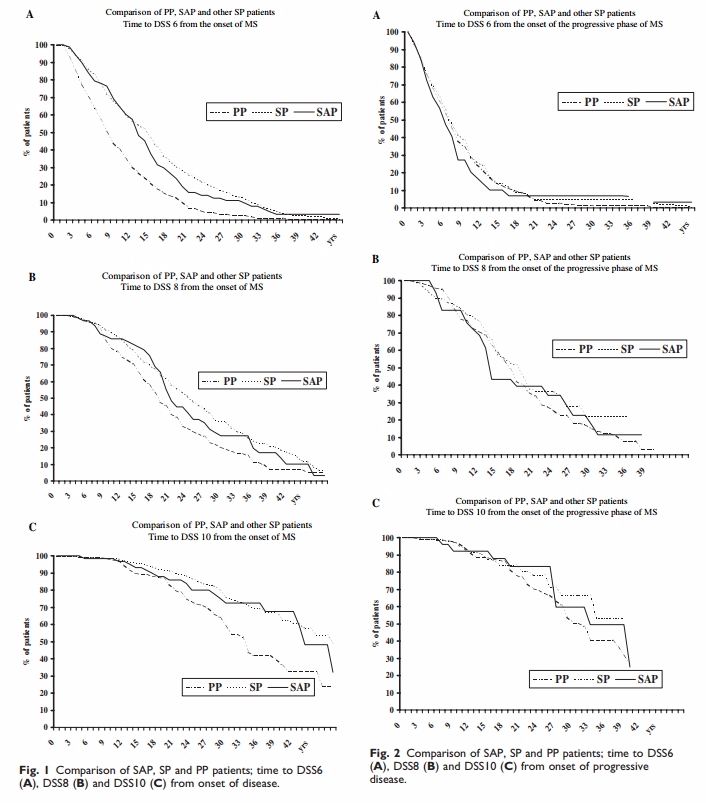
Other arguments in favour of PPMS and SPMS being the same disease relates to genetic and natural history studies. People with PPMS and relapse-onset MSers have the same genetic background. Once people with relapse-onset MS enter the so-called clinical phase of SPMS they progress at exactly the same rate as pwPPMS. 


Kremenchutzky et al. The natural history of multiple sclerosis: a geographically based study 9: observations on the progressive phase of the disease. Brain. 2006 Mar;129(Pt 3):584-94.


It is for the reasons above that there is a strong argument for doing trials on combined populations of progressive MS. In other words, we should combine PPMS and SPMS populations into one study. I am aware that this is a controversial topic, particularly in the eyes of the regulators, but it needs serious and prolonged debate. If we don’t do this then treatments will continue to be licensed for one subtype of progressive MS, and not the other clinical subtype, until additional trials are done. This is not in the interests of pwMS. Additional trials cost money and time. Time is not a something people with progressive MS have on their side. 5-years in the life of someone with progressive MS may be the difference between using a walking-stick and becoming bed-bound.


CoI: multiple