Framing

Barts-MS rose-tinted-odometer: zero-★’s – still seeing red

When the EMA doubted its wisdom and ran scared on alemtuzumab, after an Article 20 review of its benefits and risks, I was inundated with emails and queries.

“Gavin, didn’t you see this coming? Surely, alemtuzumab should never have been licensed as a 1st-line treatment for active MS? Clearly, the FDA got this right and the EMA made a mistake?”

What we are all forgetting in this debate is how bad MS can be as a disease and most of the early damage occurs occultly before people with the disease and their close ones realise the extent of the damage. What is lost in MS is lost forever. We have no magic treatment that can repair the damage and turn back the clock, which is why the Article 20 alemtuzumab review was so critical for the field. By the regulator’s taking away the ability of pwMS to assess and weigh up their own risks, and choose alemtuzumab first-line, has turned back the clock. In the UK alemtuzumab can only be used as a first-line agent in patients with rapidly evolving severe (RES) MS (two disabling attacks in a 12 month period), which is now a very small group of patients.

Early effective treatment in MS is about prevention; preventing the accrual of irreversible damage and giving pwMS the opportunity to age relatively normally. Now that alemtuzumab has become a 2nd- or 3rd-line option for pwMS many are seeking alternative treatment strategies and it has increased health tourism abroad for AHSCT. Is this what the EMA wanted?

As AHSCT is a procedure and not a drug, it doesn’t require EMA or MHRA approval. Therefore, we should be actively pushing for AHSCT to become a 1st-line treatment option. If I had MS, why would I want to watch and wait whilst I failed one or two DMTs before getting to the very high efficacy IRTs (immune reconstitution therapies) that have the biggest impact on preventing end-organ damage, reversing disability, inducing long-term remission and possibly offering a cure? Interestingly, both of these treatment options are considered to be the most cost-effective DMTs available.

When asked which DMT would I choose if I had MS, I have started saying AHSCT. When I admitted this a few years ago one of my patients, who I have been looking after for over a decade, sent me an email stating how upset she was that I had never offered her AHSCT. I clearly need to explain my position so as not to upset anyone else.

AHSCT is not on offer as a routine NHS therapy. At the moment AHSCT is only considered a 3rd-line treatment in the most active patients. Another problem is that it is not on offer across the country. There are only a handful of MS centres that are prepared to refer their patients for AHSCT. This means that access to AHSCT is not equitable and explains why an increasing number of patients travel abroad, at great personal cost, to receive this therapy.

The block in access to AHSCT seems to be at the level of the neurologist/MSologist. NHS England guidelines for bone marrow transplant (BMT) units allow them discretionary use of up to 15% of their AHSCT procedures to treat autoimmune conditions, which includes multiple sclerosis. As BMT units exist across the country access to these units would simply require a referral from a neurologist to the unit to request AHSCT as a treatment for MS. The latter, however, is unlikely to happen unless the local MSologist champions AHSCT as a procedure and gets their local haematology unit on board. It always takes a local champion to make things happen.

Another factor that has changed in the last 10 years is the strength of the evidence demonstrating how effective AHSCT really is as a treatment for MS. The MIST trial, the first large randomised controlled trial, and several meta-analyses of AHSCT confirm that AHSCT is a very effective therapy. At the same time, the risks associated with AHSCT have improved and the mortality in most BMT units is now below 1% for MS. This has now tipped the scales in favour of AHSCT becoming a mainstream treatment for MS.

There is however resistance from the MS community about AHSCT being offered as first-line therapy. Why? I suspect because the risk: benefit profile of AHSCT has yet to be compared in a head-2-head study against our most effective licensed treatment, alemtuzumab. This is why we are starting a head-2-head study, the STAR-MS trial, of alemtuzumab or ocrelizumab vs. AHSCT in the hope of generating evidence. With the EMA making alemtuzumab 2nd/3rd-line this trial will almost certainly recruit too few patients on alemtuzumab for a direct comparison of alemtuzumab vs. AHSCT. I predict the majority of patients in the comparator arm will be on ocrelizumab. This would not be asking the same question as ocrelizumab is used as maintenance therapy and may in fact do very well against AHSCT; the trial is using clinical NEDA (no relapses or disease progression) as the primary clinical outcome. Ocrelizumab is pretty good in the short term at achieving clinical NEDA. For me, end-organ damage or brain volume loss in years 2 and 3, after rebaselining at 12 months, would be a much more informative outcome. Do you agree?

We know already that AHSCT will be more cost-effective than alemtuzumab and ocrelizumab, but will it be more effective and most importantly will it be safer? I suspect it may not be as safe in the short-term, but what about over a 10-20 year horizon? The one long-term AHSCT risk that worries everyone is the delayed secondary malignancy risk; cyclophosphamide that is used in both the stem cell mobilisation and ablation phases of AHSCT is a DNA alkylating agent and hence a mutagen. This is why long term follow-up data from the European Bone Marrow Transplant Registry will be so important to provide this information. The other downside of AHSCT is ovarian toxicity and infertility, which in my experience are the most common reasons for my patients saying no.

Please remember that most of the proponents of AHSCT as a treatment for MS recognise that the major benefits from treatment will only be derived if AHSCT is used early in the course of the disease. This explains why most BMT units don’t offer AHSCT to pwMS with more advanced, or progressive, MS. However, this has not stopped private, fee-for-service, units offering AHSCT to all-comers. If you have the money and are willing to travel abroad you will be able to find a BMT unit that will treat you. I think this is wrong and will not happen in the NHS if and when AHSCT becomes widely available. We have to be honest with our patients about the risks and the benefits of AHSCT and why we will limit AHSCT to those who will benefit the most. In fact, there is evidence that more advanced patients may actually be made worse by AHSCT; the chemotherapy used to ablate the immune system is neurotoxic and may speed up neuronal loss. In addition, serious life-threatening infections are more common when you have AHSCT, particularly in patients with more advanced MS, and infections are well known to worsen MS disability in more advanced disease.

Please be aware that AHSCT is not for the faint-hearted. It is a risky therapy with serious adverse events and quite a high mortality. Even a mortality rate of 0.3–0.5% is high when compared to licensed DMTs. Should this stop us from offering AHSCT first-line? I think not. If we have been prepared to offer alemtuzumab, with its risk profile as a first-line treatment, why not AHSCT? Most pwMS would agree that the decision regarding what is an acceptable risk to take should be taken by the patient and their families, and not the neurologist or other HCP. There is data showing that neurologists are much more risk-averse than pwMS. Neurologists need to acknowledge this bias, which is likely to be an unconscious bias, and let their patients make the decision.

What I am really trying to do by stating that if I had MS I would choose AHSCT as my treatment is to reframe the DMT debate, particularly in relation to access to highly effective DMTs. By focusing on AHSCT as a first-line treatment it should at least make you consider what your treatment objectives are in MS.

Framing is another cognitive bias that was identified by Daniel Kahneman, the Nobel laureate, and his partner Amos Tversky. By moving the frame upwards, or to the right, i.e to include AHSCT as a 1st-line therapy, it makes it more likely for pwMS and their neurologists to choose more effective, but arguably safer, treatments 1st-line.

We now know that people who start on a low to moderate efficacy DMT do worse on average than those who start on a high or very high efficacy therapies do better. Despite this, the majority of pwMS are not told this and are started on a low efficacy or platform DMTs without ever being given the option of a high efficacy DMT. Why? It is not due to lack of access to treatments as we now have several NICE and NHS England approved high efficacy DMTs available as first-line treatments.

So yes, if I had active MS I would want to have the full spectrum of high-efficacy DMTs available to choose from including AHSCT. I would want to know about their relative efficacy and what the aim of the treatments are. I would certainly want to have a discussion about the possibility of a potential cure.

By reframing the spectrum of efficacy by including AHSCT within the frame we may nudge pwMS and their neurologists to move up the treatment ladder and choose a high efficacy DMT sooner when they have more brain to protect.

Unfortunately, AHSCT as a first-line option is not going to happen any time soon, unless the MS community starts debating the issue in earnest. I am not alone, or out on a limb with my position;  I have a short, but growing list, of MSologists who have told me that if they had MS they would want AHSCT first-line. If your MSologist would like his/her MS treated with AHSCT, why wouldn’t you? 

PS: this blog post is adapted from a Medium post ‘Framing the DMT debate’ published on the 15th April 2019.

Conflicts of Interest

Preventive Neurology

Twitter

LinkedIn

Medium

General Disclaimer: Please note that the opinions expressed here are those of Professor Giovannoni and do not necessarily reflect the positions of the Barts and The London School of Medicine and Dentistry nor Barts Health NHS Trust.

Robotnik

Barts-MS rose-tinted-odometer: seeing red

I would like to thank all my colleagues who have written to me in the last few weeks in support of the blog, and what it stands for, as it emerges like a phoenix from its latest existential crisis.

It is interesting that many of my colleagues who have written to me privately seem reluctant to stick their heads above the parapet. They would rather remain as the silent majority, trapped in a system that is very difficult to escape from. I note very few MSologists are prepared to comment on or take a position on the two patients I presented in  ‘ethical quandary’. Why?

In response to the first case with ‘inactive secondary progressive MS’ in my ‘ethical quandary’ post. Yes, we are only in this position because of how we define so-called MS states. The fact that the Lublin criteria state that once you become secondary progressive you can’t go back to being relapsing-remitting is farcical and is not based on biology. Do you think MS, the real disease, has a molecular one-way switch that says RRMS or SPMS? Similarly, when someone who is NEDA-2 (no relapses or MRI activity) but is worsening (increasing disability) is classified as being inactive the classification system doesn’t necessarily acknowledge the limitations of the technology that is being used for looking for inflammation. If we are going to change things for our patients with MS we have to stand up and be counted. Maybe we should start an alternative to the Lublin committee to redefine MS as a biological disease and not a clinico-radiological entity. What do you think? I would say no. It would be better for the Lublin committee to change their perspective.

Finally, those of you who blindly follow guidelines, such as the NHS England DMT algorithm, need to question why the guidelines have been formulated in the first place. The NHS England guidelines are to make sure we don’t prescribe outside of the NICE approval criteria, which are based on rigid and very narrow cost-effectiveness models and not real-life patients as presented in the two cases in the ‘ethical quandary’ post. Please remember guidelines are guidelines and there is some flexibility allowed in how you interpret them. My position is that as treating MSologists our duty is to our patients; we have to do things to try and maximise their health outcomes, which is not only physical outcomes, but their quality of life, mental health, employment and social capital to name a few, and at the same time trying to reduce healthcare utilization. There is a term for MSologists who blindly follow guidelines without questioning them; it is a robotnik. 

Are you a robotnik? 

Conflicts of Interest

Preventive Neurology

Twitter

LinkedIn

Medium

General Disclaimer: Please note that the opinions expressed here are those of Professor Giovannoni and do not necessarily reflect the positions of the Barts and The London School of Medicine and Dentistry nor Barts Health NHS Trust.

Regrets

Barts-MS rose-tinted-odometer: ★★

Shortly after leaving Queen Square to take up my current position at Barts and The London Juliet Solomon, a good friend, and one of the research managers who had an office opposite me on the 6th floor of the Institute of Neurology sent me a signed copy of the ‘The Book of Regrets’ she had compiled as a present. She has asked celebrities to write essays on something they had regretted in their lives. The book has become a bestseller with all the proceeds of the sales going to support the National Hospital for Neurology and Neurosurgery. This is the kind of thing Juliet does; she has a very big heart. A mensch!

At the time I thought about what I would write if I was asked to contribute a chapter to the next edition of the book. I am still not sure, but from a professional perspective, my biggest regret is not being more proactive in derisking alemtuzumab as a treatment for MS. It has become clear to me that a small proportion of people with MS (pwMS) who are treated with alemtuzumab and HSCT early in the course of their disease are cured of MS when you use a contemporary definition of an MS cure

If the infusion reactions, infections and secondary autoimmunity problems went away who would choose anything but alemtuzumab to treat their MS?

Infusion reactions: Can we reduce the infusion reactions of alemtuzumab? Yes, we can. Pre-treating with steroids starting the night before and moving from the intravenous to the subcutaneous route would make infusion reactions minor. So why hasn’t this been done? Money! MS centres/units make lucre out of infusing patients. I have used the subcutaneous route to avoid a second about of steroid-induced psychosis, to avoid steroid-induced metabolic mayhem in a patient with MS and type 1 diabetes and in a patient who developed avascular necrosis of one hip after his first course of alemtuzumab. It was remarkable; there were no major alemtuzumab infusion reactions despite these three patients being steroid-free. The pharmacodynamic data, i.e. the cell depletion data for the IV and SC routes are identical. The main reasons for us not switching all our patients to subcutaneous alemtuzumab was money, resource and inertia. In the recent past, we used to make money for the unit by giving infusions. Fortunately, with NHS block contracts, this perverse incentive has disappeared. Sanofi-Genzyme also provides contract nurses who come in to give the infusions and monitor the patients. If we converted our entire alemtuzumab administration programme to a subcutaneous route the workload would fall on our overworked nurses. Our nursing lead in our daycare unit reminded me of this. REGRET 1 we didn’t covert to sc alemtuzumab. 

Secondary autoimmunity: What about preventing or reducing the incidence of secondary autoimmunity?

The immune system has many mechanisms in place to prevent autoimmunity. When you learn how the immune system works it is really quite surprising that autoimmunity is so uncommon. What the immunologists tell us is that there must be a series of underlying biological processes that are causing secondary autoimmunity and if we can work out what these are we can intervene and prevent this complication. This is what Joanne Jones and Alasdair Coles tried to do in Cambridge. Their hypothesis was that because the immune system reboots itself from peripheral memory cells it is more likely to result in an aberrant autoimmune response. They tried rebooting the immune system using more naïve cells from the thymus using the hormone palifermin, which stimulates the thymus to produce more naïve T-cells. Sadly it didn’t work, but at least they tried and they should be congratulated for doing this study.  

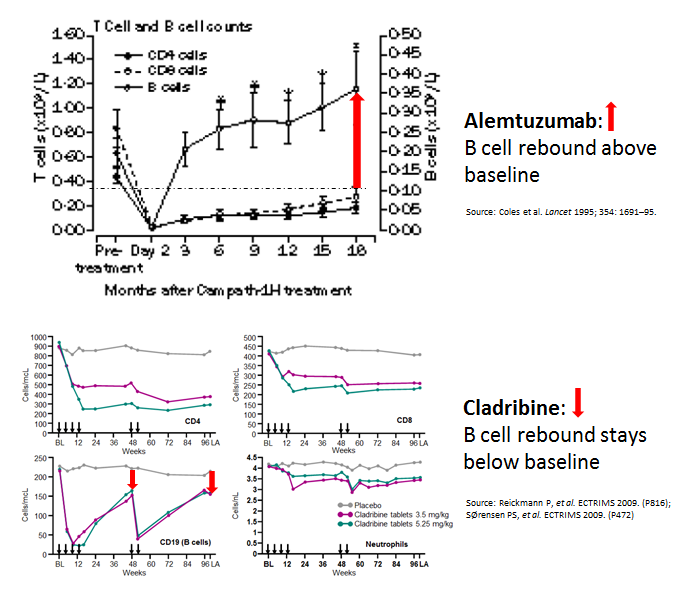
Interestingly, when you compare cladribine, another IRT, with alemtuzumab you can’t help but notice that the B-cell reconstitution profiles are very different. With alemtuzumab, they come back very quickly and overshoot their baseline values. We, and others, have hypothesised that if you change the profile of the B cell reconstitution with a small dose of the B cell depleting antibody rituximab you may be able to prevent this secondary autoimmunity. We are really talking about a very small dose of rituximab, i.e. 10-20mg, just enough to delay B cell reconstitution by 4-6 months. I proposed this concept to Genzyme 8 or 9 years ago, but without data to support the hypothesis they were not keen to support an exploratory study. Why didn’t I push to get this funded from another source? If we had done this study back then we would have had the results by now. Can you imagine how impactful this could be for pwMS if we could prevent secondary autoimmunity post-alemtuzumab? REGRET 2 no doing alemtuzumab-rituximab trial and not setting up an adaptive trial platform for testing multiple strategies to prevent secondary autoimmunity post-alemtuzumab.  

Infections: One success story has been the derisking of alemtuzumab-associated infections with prophylactic antibiotics and antivirals, and the proactive approach to baseline infectious disease screening and vaccination. SUCCESS 1 reducing alemtuzumab-associated infections. 

Anti-drug antibodies: Another success story has been exposing alemtuzumab’s problems with anti-drug antibodies (ADAs) and the development of an assay to screen for these antibodies. Why use a therapy, at great expense, that is not going to work because of neutralizing anti-drug antibodies. SUCCESS 2, anti-drug antibody screening.

A big problem that emerged was how alemtuzumab was licensed and used in the USA. The FDA has essentially licensed alemtuzumab with hand-cuffs, therefore, alemtuzumab was and is used as the DMT of last resort in the US. This led to it being used in an older more advanced cohort of pwMS who had comorbidities. In this group of patients, a new adverse event profile emerged, particularly vascular complications. This led to a safety review and the license of alemtuzumab’s use was changed and it is now only used infrequently, second or third -line and often in people with more advanced MS.  I was personally involved with the original EMA submission; it was a real uphill battle to get alemtuzumab licensed as first-line therapy. Allowing the EMA to change how we use alemtuzumab, i.e. making pwMS have to wait to become eligible for the therapy is a travesty. We, Genzyme and MS community, should have made a more robust argument to the CHMP not to change alemtuzumab’s label. REGRET 3 not allowing alemtuzumab to be used first-line in active MS; it can only be used as a first-line agent in patients with rapidly evolving severe (RES) MS (two disabling attacks in a 12 month period). The problem is that very few patients have RES MS as they tend to be treated now before they have their second disabling relapse.  

Finally, my colleagues. Apart from a small group of MSologists, and we know who we are, most MSologists don’t prescribe alemtuzumab. They find the therapy too difficult and risky to use. I have tried to educate and get more of my colleagues to at least offer alemtuzumab as an alternative to HSCT, but to no avail.  In the UK, we were all geared up to do a head-2-head study of alemtuzumab vs. AHSCT. However, once ocrelizumab was licensed the MS community said they would not be able to recruit for this trial so it has now been converted into alemtuzumab or ocrelizumab vs. AHSCT trial. In reality, this study is going to be a head-2-head of ocrelizumab vs. AHSCT study. Not getting the wider MS community to understand how effective alemtuzumab is REGRET 4. Instead of success, we have a generation of refuseniks

The question we need to ask ourselves is do we really want to throw the baby out with the bathwater? We have two, and possibly three, treatment strategies that may cure a minority of pwMS of having MS. Yes, CURE. However, alemtuzumab and HSCT are on the fringe of MS treatments. Why? 

I suppose you are asking about the third option. It may be cladribine. The results of the ORACLE trial of cladribine in patients with clinically isolated syndromes (CIS) are quite remarkable. We are trying to recall the patients from the ORACLE study a decade or more later to see how many are still in remission and haven’t converted to MS. The problem we have is that cladribine is not even a treatment option for CIS despite this stunning data, hence we may be denying a large number of people with CIS, a relatively safe immune reconstitution therapy or IRT, that may prevent many of them from developing MS. The downside of this is the depressing fact that many MSologists still don’t treat CIS (see my blog post on watchful waiting).

Perumal et al. Subcutaneous administration of alemtuzumab in patients with highly active multiple sclerosis. Mult Scler. 2012 Aug;18(8):1197-9.

Alemtuzumab is an anti-CD52 monoclonal antibody with remarkable efficacy in relapsing multiple sclerosis (MS). In clinical trials and off-label use in MS, alemtuzumab has been administered intravenously (IV). Alemtuzumab is approved for chronic lymphoid leukemia as IV. Oncology guidelines recommend alemtuzumab subcutaneous (SC) over IV. There is no report of alemtuzumab SC in MS. We report two patients with highly active relapsing MS who were treated with SC alemtuzumab, had significant improvement and tolerated SC alemtuzumab well without the typical infusion-associated adverse events. SC alemtuzumab in MS warrants further studies as this may enhance patient convenience and minimize infusion-associated adverse events.

Leist et al.  Effect of oral cladribine on time to conversion to clinically definite multiple sclerosis in patients with a first demyelinating event (ORACLE MS): a phase 3 randomised trial. Lancet Neurol. 2014 Mar;13(3):257-67. 

Background: Patients who develop relapsing-remitting multiple sclerosis (MS) present with a first clinical demyelinating event. In this double-blind, multicentre, randomised, phase 3 study we investigated the effect of oral cladribine on conversion to clinically definite MS in patients with a first clinical demyelinating event, when given at the same doses shown to be effective in relapsing-remitting MS.

Methods: Between Oct 21, 2008, and Oct 11, 2010, we recruited patients aged 18-55 years, inclusive, from 160 hospitals, private clinics, or treatment centres in 34 countries. Eligible patients had a first clinical demyelinating event within 75 days before screening, at least two clinically silent lesions of at least 3 mm on a T2-weighted brain MRI scan, and an Expanded Disability Status Scale score of 5.0 or lower. Patients with a first clinical demyelinating event ≤75 days before screening were randomly assigned (1:1:1) to receive cladribine tablets at cumulative doses of 5.25 mg/kg or 3.5 mg/kg or placebo. Randomisation was done with a central web-based randomisation system and was stratified by geographic region. Masking was maintained using a two-physician model. The primary endpoint of this 96-week study was time to conversion to clinically definite MS according to the Poser criteria. This study is registered with ClinicalTrials.gov, number NCT00725985.

Findings: Of 903 participants assessed for eligibility, 616 patients received cladribine 5.25 mg/kg (n=204), cladribine 3.5 mg/kg (n=206), or placebo (n=206). At trial termination on Oct 25, 2011, cladribine was associated with a risk reduction versus placebo for time to conversion to clinically definite MS (hazard ratio [HR] for 5.25 mg/kg=0.38, 95% CI 0.25-0.58, p<0.0001; HR for 3.5 mg/kg=0.33, 0.21-0.51, p<0.0001). Adverse events were reported in 165 (81%) patients in the cladribine 5.25 mg/kg group, 168 (82%) patients in the cladribine 3.5 mg/kg group, and 162 (79%) patients in the placebo group. We noted no increase in risk of adverse events with active treatment versus placebo apart from lymphopenia, which was a severe event in 10 (5%) patients in the 5.25 mg/kg group and four (2%) patients in the 3.5 mg/kg group.

Interpretation: Both doses of cladribine significantly delayed MS diagnosis compared with placebo. The safety profile of cladribine was similar to that noted in a trial in patients with relapsing-remitting MS. Further research could clarify the potential effects of oral cladribine treatment in the early stages of MS.

Conflicts of Interest

Preventive Neurology

Twitter

LinkedIn

Medium

General Disclaimer: Please note that the opinions expressed here are those of Professor Giovannoni and do not necessarily reflect the positions of the Barts and The London School of Medicine and Dentistry nor Barts Health NHS Trust.

An ethical quandary

Barts-MS rose-tinted-odometer: ★★

The two case studies below are creating an ethical quandary in my MS practice. Can you help me please?

Case 1

The first is the 40-year old woman with MS who is NEDA-2 (no evident disease activity) on DMF (Tecfidera) with no documented relapses in the last 4 years and a series of annual MRI scans with no new or enlarging T2 MS lesions. However, there has been a worsening of her disability; increasing bladder problems and a progressive spastic paraparesis (weak legs). Her EDSS has moved from 4.0 to 5.5 in the last three years. She has self-diagnosed herself as having secondary progressive MS and wants to switch to siponimod. Unfortunately, according to the current NICE approval and NHSE guidelines, this patient is ineligible for siponimod because she has inactive MS (NEDA-2). 

Do I recommend she stops her DMF so that her MS can reactivate, which will then make her eligible for siponimod? Most MSologists would say yes, mainly because the development of SPMS is one of NHS England’s stopping criteria. The problem I have is we, the patient and I,  have no idea how active her MS will become if and when her MS reactivates. For example, she could have a catastrophic spinal relapse that leaves her doubly incontinent and quadriplegic or it may be on the other side of the spectrum, i.e. one or two new asymptomatic MRI lesions on her annual MRI follow-up. If you were in her position would you stop your treatment to develop active MS? 

Case 2

The second is the 40-year old woman who started natalizumab as a first-line therapy 11 years ago after presenting with two disabling relapses in a four-month period. She has done exceptionally well on natalizumab, i.e. she is NEDA-3 (no relapses, no MRI activity and no change in her EDSS). In fact, her original disabilities from the two relapses recovered. At present she is fully functional, working full-time and very active physically. For example, she plays competitive tennis in her local sports club and ran the London marathon 2 years ago. Her current EDSS is 1.0.

The problem is that her serial annual MRI studies demonstrate that she has progressive macroscopic (visible by the naked eye) brain volume loss. Being an intelligent woman and a self-taught MS expert she knows this is a poor prognostic sign and she wants to stop natalizumab and have HSCT or alemtuzumab. She is aware from reading The MS-Blog (formerly the Barts-MS blog) that alemtuzumab and HSCT have a greater impact than natalizumab on end-organ damage or brain volume loss. After HSCT and alemtuzumab treatment brain volume loss is on average in the normal range (please see BEYOND NEDA).

Would you allow this patient to switch treatments? Under the current London MS HSCT guidelines she would not be eligible for HSCT as she has not failed natalizumab; please note, progressive brain volume loss is not considered a treatment failure. What about alemtuzumab? Applying the strict NHSE guidelines she would not be eligible for alemtuzumab as her MS is inactive at present. However,  one could argue that we need to go back to 2010 when she started natalizumab and ask ourselves now would she have been eligible back then if alemtuzumab had been available? The answer is yes as she had what we call rapidly evolving severe MS; in 2021 someone with rapidly evolving severe MS could be treated with alemtuzumab first-line.  Should we apply treatment criteria retrospectively? 

This patient is JCV negative. If, however, she seroconverted to being JCV positive it would be easier to justify to NHS England for the switch to alemtuzumab, i.e. NHSE guidelines support the principle of derisking PML. The one thing I can’t tell this patient is whether or not alemtuzumab or HSCT will have an impact on her brain volume loss as we simply don’t have the data from a cohort of patients making the switch from natalizumab to alemtuzumab 10+ years into their disease. In other words will the smouldering or real MS that causes the accelerated brain volume loss respond to a potent IRT treatment strategy 11 years after diagnosis? This patient understands there is no data on natalizumab-switchers to support her request, but she is willing to take the risk of either alemtuzumab or HSCT. What do I advise her?

HELP! It is not easy being an MSologist. Please note these two scenarios are based on real patients of mine and are not hypothetical and represent the MS world I live and practice in. 

Conflicts of Interest

Preventive Neurology

Twitter

LinkedIn

Medium

General Disclaimer: Please note that the opinions expressed here are those of Professor Giovannoni and do not necessarily reflect the positions of the Barts and The London School of Medicine and Dentistry nor Barts Health NHS Trust.

Refusenik

Barts-MS rose-tinted-odometer: ★★

She is only 24 years of age; a graduate trainee in a marketing company. She has a promising future ahead of her. She lives in London and has a long term partner; they met at University. She knows he is the one for her and they are planning to get engaged in the next 1 to 2 years. Like most graduate trainees they find London expensive and share a house with four other people. She has found lockdown very stressful not because she has had to work from home with four other people, but because she was diagnosed with MS in February last year. 

Despite starting DMF (Tecfidera) in June 2020, she had a very disabling relapse over the Christmas period with lower limb weakness and new-onset bladder symptoms. She has also noted a fine tremor in her right hand. Her latest MRI showed several new lesions and a large lesion in her thoracic spinal cord. Her consultant neurologist has offered her ocrelizumab. However, after doing her own online research including reading The MS-Blog (formerly known as the Barts-MS blog) she has asked to be treated with alemtuzumab. Her consultant has said no and pointed out their centre has virtually stopped using alemtuzumab because as a treatment it is too risky and there are much safer options.

Out of desperation this patient went to see a colleague of mine in private who said of course she can have alemtuzumab and she has now been referred to our centre for treatment. We are now in the process of doing the baseline bloods and will hopefully get this patient treated with her first course of alemtuzumab in the next few weeks. Tragically this poor woman has lost time. What would happen if in the interim she has a further catastrophic spinal cord relapse that leaves her paralysed? Who would be responsible? 

I am beginning to refer to my colleagues who are not prepared to offer and use alemtuzumab and HSCT as the ‘refuseniks’. What they don’t realise is that they are putting themselves and their institutions at risk from legal challenge. How come? When NICE (National Institute of Health and Care Excellence) was created it was done so via an act of parliament. NICE’s primary aim was to get rid of the curse of postcode prescribing and variable access to treatments. Therefore if a therapy has been NICE approved the NHS has a legal obligation to offer people a specific treatment if they are eligible for that treatment. Therefore, in the case above her previous consultant is breaking the law and putting not only him or herself at risk of a legal challenge, but the relevant NHS Trust as well.

In 2021 why are neurologists still so paternalistic? Not allowing patients to choose their own treatment is against one of the central tenets of modern medicine.  In reality, it is not the neurologist or the institution where the neurologist works who are taking a risk when someone is treated with alemtuzumab, it is the patient who is taking the risk. Don’t they understand this? It is getting to the point in time when we are going to have to start naming and shaming these refusenik neurologists. Hopefully, when the national audit figures from blueteq, NHS England’s database of high-cost drugs, is published those centres who are not prescribing alemtuzumab or offering referral for HSCT will be exposed. I am of the opinion that if you are not using alemtuzumab or HSCT in a proportion of your patients with highly active MS then you and your centre are not managing MS the way it should be managed in 2021.

I am sure not all of my neurology colleagues will agree with me; do you?

Conflicts of Interest

Preventive Neurology

Twitter

LinkedIn

Medium

General Disclaimer: Please note that the opinions expressed here are those of Professor Giovannoni and do not necessarily reflect the positions of the Barts and The London School of Medicine and Dentistry nor Barts Health NHS Trust.

#MSCOVID19: T-cells and anti-CD20 therapy

Barts-MS rose-tinted-odometer: ★★★

I have hypothesised that the reason pwMS on anti-CD20 therapy are at greater risk of getting COVID-19 and severe COVID-19 is not about the now, but the past. There is really no reason why a pwMS on anti-CD20 therapy is at increased risk of getting exposed to SARS-CoV-2 compared to pwMS on other DMTs, be it injectables, oral tablets or other infusion therapies. However, people on anti-CD20 therapies are likely to have blunted cross-reactive immune responses to community-acquired coronaviruses. This cross-reactive immunity is protective and reduces your chances of getting symptomatic or severe COVID-19, in other words in the figure below, cross-reactive immunity shifts the population to the left and being on an anti-CD20 therapy prevents this immunity from developing and shifts the curve to the right. I hope this makes sense. 

In the study below on healthcare workers, SARS-CoV-2 cross-reactive antibodies elicited by past common community-acquired coronavirus infections were not associated with protection; however, the duration of symptoms following SARS-CoV-2 infections was significantly reduced in individuals with higher antibody titers, i.e. less severe infection. 

As antibody titers decline over time after common coronavirus infections, individuals with higher anti-coronavirus antibody titers are more likely to be recently infected with community-acquired common coronaviruses compared to individuals with lower antibody titers. Therefore recent community-acquired coronavirus infections are likely to prevent or reduce the severity of COVID-19 in line with my hypothesis above. What is different is that this protection is unlikely to be purely antibody-mediated, but rather T-cell responses are likely to be responsible for this protection. 

What is the relevance of these findings? I suspect that anti-CD20 therapies also blunt protective T-cell responses; possibly by reducing the efficiency of SARS-CoV-2 antigen presentation to T-cells. Based on this study and what happens to people on anti-CD20 who get COVID-19 I would not be surprised if T-cell COVID-19 vaccine responses on anti-CD20 therapies are blunted, similar to antibody responses. The good news is that we won’t have to wait too long for this data to emerge. 

Please note, although interesting, this data does not change my current advice, i.e. #StayCalm and #GetVaccinatedASAP

Gouma et al. Sero-monitoring of health care workers reveals complex relationships between common coronavirus antibodies and SARS-CoV-2 severity. MedRxIV 2021 https://doi.org/10.1101/2021.04.12.21255324

Recent common coronavirus (CCV) infections are associated with reduced COVID-19 severity upon SARS-CoV-2 infection, however the immunological mechanisms involved are unknown. We completed serological assays using samples collected from health care workers to identify antibody types associated with SARS-CoV-2 protection and COVID-19 severity. Rare SARS-CoV-2 cross-reactive antibodies elicited by past CCV infections were not associated with protection; however, the duration of symptoms following SARS-CoV-2 infections was significantly reduced in individuals with higher common betacoronavirus (βCoV) antibody titers. Since antibody titers decline over time after CCV infections, individuals in our cohort with higher βCoV antibody titers were more likely recently infected with common βCoVs compared to individuals with lower antibody titers. Therefore, our data suggest that recent βCoV infections potentially limit the severity of SARS-CoV-2 infections through mechanisms that do not involve cross-reactive antibodies. Our data are consistent with the emerging hypothesis that cellular immune responses elicited by recent common βCoV infections transiently reduce disease severity following SARS-CoV-2 infections.

Conflicts of Interest

Preventive Neurology

Twitter

LinkedIn

Medium

General Disclaimer: Please note that the opinions expressed here are those of Professor Giovannoni and do not necessarily reflect the positions of the Barts and The London School of Medicine and Dentistry nor Barts Health NHS Trust.
Passing on the baton

Barts-MS rose-tinted-odometer: ★★★★★

As an academic neurologist and MS researcher, it is one thing to generate new ideas and data, it’s another thing to get people to adopt them. Therefore the dissemination of knowledge has dominated my agenda in the past few years. With a resetting of my priorities back towards research I have passed the education baton to younger colleagues. This includes my role as director of the MS Academy. This doesn’t mean I don’t support the aims and objectives of the MS Academy, which in short is to upskill and train the next generation of HCPs working in MS. So if you are interested in MS please sign-up for one of the MS Academy’s masterclasses. In addition to education, the MS Academy is rapidly expanding its membership and has become the ‘British Society of MS Healthcare Professionals’ with the aim of improving MS services and outcome for our patients. There are still a few places left on the upcoming Foundation and Advanced classes. 

MS-MasterClasses-2021

Conflicts of Interest

Preventive Neurology

Twitter

LinkedIn

Medium

General Disclaimer: Please note that the opinions expressed here are those of Professor Giovannoni and do not necessarily reflect the positions of the Barts and The London School of Medicine and Dentistry nor Barts Health NHS Trust.

Flashback

Barts-MS rose-tinted-odometer: ★

When I described in a post that I was having flashbacks, related to possible post-traumatic stress disorder (PTSD) from my accident, it struck a chord with pwMS who bravely described their own flashbacks about the way their diagnosis of MS was handled. In response to this, we teamed up with shift.ms to do an online survey of its members. We advertised the survey via the blog and many of you participated. The results of this survey were so worrying that we submitted an abstract to the Association of British Neurologists (ABN) meeting. This abstract was accepted and here is the poster for you to read. 

This work made me realise that this is a serious problem and we really need to do something about it, i.e. to ensure that the next generation of neurologists learn how to tell their patients that they have MS in a way that is supportive and gives hope. We really don’t want another generation of pwMS suffering from PTSD. With my renewed focus on MS prevention, I really don’t have time to run with this programme of work myself and I am hoping some young and highly motivated person picks up the baton and makes it happen. We need a national training programme for aspiring MSologists and other HCPs on how to give the diagnosis of MS in a way that doesn’t result in PTSD. In parallel, we need national support programmes for pwMS to deal with the emotional rollercoaster ride that inevitably comes after being told you have MS.

Don’t you think it is shocking that in 21st-century pwMS are left traumatised with flashbacks because of the way their MS was diagnosed? Are you not disappointed that most MS services don’t have support structures in place, similar to those in cancer services, to counsel and support their patients when they are diagnosed with MS? 

Let’s make a difference so that the next generation of pwMS don’t suffer from PTSD. 

Conflicts of Interest

Preventive Neurology

Twitter

LinkedIn

Medium

General Disclaimer: Please note that the opinions expressed here are those of Professor Giovannoni and do not necessarily reflect the positions of the Barts and The London School of Medicine and Dentistry nor Barts Health NHS Trust.

The watchful wait

Barts-MS rose-tinted-odometer: ★★

In the last 2-3 years I have been talking about the need for the MS community to treat-2-target beyond NEDA (no evident disease activity) to try and prevent end-organ damage. Yes, we need to protect the end-organ in MS just as the nephrologists try to protect the kidney in autoimmune kidney disease and the rheumatologists the joints in rheumatoid arthritis (RA). 

However, in a very similar way to MS if you let too much damage accumulate in the kidney or RA joint self-perpetuating mechanisms are set up that lead to slow deterioration in kidney and joint junction and they eventually fail. Fortunately for nephrologists, you can put patients with kidney failure on renal dialysis (an artificial kidney) or offer a kidney transplant (substitute kidney) and in RA you can replace the joints. In comparison, in MS you can buy walking sticks, walkers, wheelchairs and exoskeletons, but you can’t repair and restore lost neurological function. This is why the ‘diagnose early, treat early, treat effectively’ message is so important. Yes, time really is brain

There is a longstanding theory that the biology of MS changes with time. So with time as the inflammatory infiltrates within the central nervous system increase, B-cell follicle-like structures develop, plasma cells take up residence, oligoclonal IgG bands appear and increase in number, microglia become diffusely activated, slowly expanding lesions or SELs increase in number, astrocytes get activated and form glial scars, demyelination increases, remyelination fails, axonal and cortical plasticity decrease and synaptic pruning increase the die is set and the course of MS becomes unmodifiable with our current DMTs. In essence ‘smouldering MS’ becomes the real MS and we can’t modify it.

In the Queen Square longitudinal CIS study (see below) the EDSS score at 14 years correlated with the lesion volume on MRI at 5 years and the increase in lesion volume over the first 5 years. In the London Ontario natural history study it was the number of relapses in the first two years that predicted poor outcome. So pwMS who only had 1 relapse in the first 2 years compared to those who had 3 or more relapses took 7.6, 12.8 and 20.3 years longer to reach EDSS scores 6 (walking stick), 8 (bed) and 10 (death), respectively. Also, subjects who developed early disability, i.e. EDSS 3.0, become disabled quicker, i.e. they reached higher EDSS scores much quicker than those who don’t develop early disability. In other words, disability begets disability. 

Therefore the clinical philosophy of watchful-waiting is hardly practised anymore even in patient’s who are diagnosed with clinically isolated syndrome (CIS). If patients with CIS have high-risk scans, i.e. lesions on the scan that look like demyelinating lesions, most neurologists now feel obliged to offer these patients treatment.  A big debate now is how aggressively do you treat people with CIS. Do you simply start them on a safe platform therapy? Or do you hit their disease with a potent IRT? I would argue the latter but instead of using alemtuzumab or HSCT, I would recommend something like oral cladribine. However, this is not possible, cladribine is not licensed for CIS and the current NHS England treatment algorithm is quite clear that we shouldn’t treat CIS. 

Treatment Algorithm for Multiple Sclerosis Disease-Modifying Therapies (NHS England Reference: 170079ALG, Date Published: 4 September 2018, Updated: 8 March 2019 Gateway reference: 07603)

‘Trials of first-line therapies in people with the original definition of Clinically Isolated Syndrome (CIS) at high risk of conversion have NOT shown a convincing long-term effect on the accumulation of disability. In 2018, NICE concluded that it was “unable to make recommendations for treating clinically isolated syndrome because the diagnostic criteria for multiple sclerosis and clinically isolated syndrome have changed and the treatment pathway has evolved”. These new diagnostic criteria are the 2010 and 2017 McDonald criteria.’

Fortunately, the number of patients presenting with a clinical event who have CIS is now very small and most of them have MS after underground a lumbar puncture and are shown to have CSF OCBs or convert to becoming MS very quickly. The question for pwCIS is how much damage will occur in the time window between presentation with CIS and conversion to MS and is this watchful waiting period of time long enough to allow the biology of MS to change, i.e. for smoulder MS pathology to take up residence in the CNS?

The question therefore remains is how early is early when it comes to treating MS? I would argue as early as possible, which is why when we were approached to be a trial centre to assess a very high efficacy DMT in RIS (radiologically isolated syndrome) or asymptomatic MS we said yes. 

I would be interested to know how many of you who had been diagnosed with CIS were treated immediately, how many of you were asked to watchfully wait before being offered treatment and how many of you still have CIS? 

Brex et al. A longitudinal study of abnormalities on MRI and disability from multiple sclerosis. N Engl J Med. 2002 Jan 17;346(3):158-64. doi: 10.1056/NEJMoa011341.

Background: In patients with isolated syndromes that are clinically suggestive of multiple sclerosis, such as optic neuritis or brain-stem or spinal cord syndromes, the presence of lesions as determined by T2-weighted magnetic resonance imaging (MRI) of the brain increases the likelihood that multiple sclerosis will develop. We sought to determine the relation between early lesion volume, changes in volume, and long-term disability.

Methods: Seventy-one patients in a serial MRI study of patients with isolated syndromes were reassessed after a mean of 14.1 years. Disability was measured with the use of Kurtzke’s Expanded Disability Status Scale (EDSS; possible range, 0 to 10, with a higher score indicating a greater degree of disability).

Results: Clinically definite multiple sclerosis developed in 44 of the 50 patients (88 percent) with abnormal results on MRI at presentation and in 4 of 21 patients (19 percent) with normal results on MRI. The median EDSS score at follow-up for those with multiple sclerosis was 3.25 (range, 0 to 10); 31 percent had an EDSS score of 6 or more (including three patients whose deaths were due to multiple sclerosis). The EDSS score at 14 years correlated moderately with lesion volume on MRI at 5 years (r=0.60) and with the increase in lesion volume over the first 5 years (r=0.61).

Conclusions: In patients who first present with isolated syndromes suggestive of multiple sclerosis, the increases in the volume of the lesions seen on magnetic resonance imaging of the brain in the first five years correlate with the degree of long-term disability from multiple sclerosis. This relation is only moderate, so the volume of the lesions alone may not be an adequate basis for decisions about the use of disease-modifying treatment.

Scalfari et al. The natural history of multiple sclerosis: a geographically based study 10: relapses and long-term disability. Brain. 2010 Jul;133(Pt 7):1914-29.

The relationship of relapses to long-term disability in multiple sclerosis is uncertain. Relapse reduction is a common therapeutic target but clinical trials have shown dissociation between relapse suppression and disability accumulation. We investigated relationships between relapses and disability progression for outcomes of requiring assistance to walk, being bedridden and dying from multiple sclerosis [Disability Status Scale 6, 8, 10] by analysing 28 000 patient-years of evolution in 806-bout onset patients from the London Ontario natural history cohort. Having previously shown no effect of relapse frequency among progressive multiple sclerosis subtypes, here we examined these measures in the pre-progressive or relapsing-remitting phase. Survival was compared among groups stratified by (i) early relapses–number of attacks during the first 2 years of multiple sclerosis; (ii) length of first inter-attack interval; (iii) interval between onset and Disability Status Scale 3 (moderate disability); (iv) number of attacks from the third year of disease up to onset of progression; and (v) during the entire relapsing-remitting phase. Early clinical features can predict hard disability outcomes. Frequent relapses in the first 2 years and shorter first inter-attack intervals predicted shorter times to reach hard disability endpoints. Attack frequencies, in the first 2 years, of 1 versus >or=3, gave differences of 7.6, 12.8 and 20.3 years in times from disease onset to Disability Status Scale 6, 8 and 10, respectively. Time to Disability Status Scale 3 highly and independently predicted time to Disability Status Scale 6, 8 and 10. In contrast, neither total number of relapsing-remitting phase attacks nor of relapses experienced during the relapsing-remitting phase after the second year up to onset of progression showed a deleterious effect on times from disease onset, from progression onset and from Disability Status Scale 3 to these hard endpoints. The failure of a regulatory mechanism tied to neurodegeneration is suggested. Relapse frequency beyond Year 2 does not appear to predict the key outcome of secondary progression or times to Disability Status Scale 6, 8 or 10, highlighting two distinct disease phases related to late outcome. These appear to be separated by a watershed within the relapsing-remitting phase, just a few years after clinical onset. Higher early relapse frequencies and shorter first inter-attack intervals herald more rapid deterioration via interaction with the neurodegeneration characterizing secondary progression. They increase the probability of its occurrence, its latency and influence–to a lesser degree–its slope. The prevention or delay of the progressive phase of the disease is implicated as a key therapeutic target in relapsing-remitting patients.

Conflicts of Interest

Preventive Neurology

Twitter

LinkedIn

Medium

General Disclaimer: Please note that the opinions expressed here are those of Professor Giovannoni and do not necessarily reflect the positions of the Barts and The London School of Medicine and Dentistry nor Barts Health NHS Trust.

Curing MS

Barts-MS rose-tinted-odometer: ★★★★★

I have been asked many times if we can cure someone who has MS. I have tried to explain what an MS cure may look like many times on this blog and have actually published articles defending the definition. 

I explained in a previous post that you may be cured of your MS, but still, have worsening or progressive disease. The difference between progressive disease, which is due to previous MS damage and ageing is that the former should burn out, i.e. after a period of time, your worsening disability should eventually stop or flat-line. In comparison, MS-induced premature ageing is unlikely to stop. In comparison defining a cure in people who are young, with reserve capacity, who have been treated earlier is a much easier task. 

From a biological perspective you can be cured but still have neurological deficits from previous damage, which need to be targeted with so-called ‘repair’ and ‘neuroregenerative’ therapies. These are separate processes and are independent of a so-called biological cure. 

Based on our current understanding of MS a cure can only really occur in relation to IRTs (immune reconstitution therapies; e.g. alemtuzumab, cladribine & HSCT), i.e. treatments that are given as short courses that address the underlying ‘cause’ of MS. Maintenance treatments that need to be given continuously can’t cure MS, because when you stop the treatment MS disease activity tends to return and in some cases, particularly with anti-trafficking agents (natalizumab and fingolimod), to a greater extent than before, which we call MS rebound.

For arguments sake let’s say we have treated a group of pwMS early in the course of their disease with an IRT and they have gone into long-term remission with no evident disease activity (NEDA). How long should we wait before declaring a victory over their MS; 10, 15, 20 or 25 years? In the past, we have proposed defining a cure as NEDA at 15 years post-treatment as a starting point (see our MSARD Editorial below). Why 15 years? This is the most commonly accepted time-point used for defining benign MS and therefore it is a standard end-point that could potentially be accepted by the wider MS community. However, this may be wishful thinking many in the field are saying that we can’t cure MS, therefore, we should not even be having this discussion. Do you agree? 

The average time to the onset of secondary progressive MS is ~14-15 years so one would expect to see a significant proportion of people manifesting with SPMS in this 15-year timeframe. If we have gotten the autoimmune hypothesis wrong and IRTs don’t work then I would estimate at least a third of treated subjects should have SPMS at 15 years. The problem with 15 years is that it is a long wait if you have MS. Many pwMS want to know ‘now’ if an IRT offers a cure, therefore we need data to convince the naysayers to support the ‘cure hypothesis’. Hopefully, convincing data, such as the HSCT data below, will change their minds and get them to at least offer IRTs to more of their patients.

In the past, I have proposed a deep phenotyping project to look at pwMS who are NEDA-2 post-IRT to see if we can find any evidence of ongoing inflammatory, or neurodegenerative, MS disease activity. I proposed interrogating them in detail and comparing them to a similar cohort of pwMS who are being treated with maintenance DMTs. Deep phenotyping is simply a term that refers to the interrogation of the CNS to see if the IRT has stopped ongoing damage and protected reserve capacity.

The study that has come closest to reaching this 15-year time point is the Canadian myeloablative HSCT cohort (see below). Mark Freedman, the principal investigator, has told me that all of these patients remain NEDA-2 (no relapses or MRI activity) although some have worsened in relation to their disability, which may be a result of previous damage and not ongoing MS disease activity. However, the most impressive observation is that this cohort of patients, who all had very active MS prior to HSCT, has ‘normalised’ their rate of brain volume loss or atrophy after an initial precipitous drop in brain volume due to pseudoatrophy and/or chemotherapy-induced neurotoxicity. Mark Freedman has also said that about a third of these patients, who have had lumbar punctures, have lost their OCBs (personal communication). However, the spinal fluid analyses have all been done quite early after HSCT hence we don’t know how many subjects who have reached 10 years of follow-up or more have persistent OCBs. Wouldn’t this be an interesting fact to know?

When the 10-year lumbar puncture and spinal fluid analysis was done in a group of Polish subjects treated with intravenous cladribine, 50% had lost their spinal fluid oligoclonal IgG bands (OCBs) at 10 years and this group of OCB-negative patients tended to have stable disease compared to those who hadn’t lost their OCBs. This is why we are doing the SIZOMUS (Ixazomib) and the DODO (high-dose ocrelizumab) studies to try and scrub the CNS clean of pathogenic B-cells and plasma cells that may be driving low-grade smouldering MS. Exciting? You bet! These two studies are one of the reasons I get up in the morning, look at myself in the mirror and say nobody can say Barts-MS isn’t doing innovative MS research. 

The question I am now asking myself is switching a definition of a cure to a biological one a better strategy? This is a new line of thinking that has been brewing in my head for the last 12 months or so. If EBV is the cause of MS can we simply put pwMS into remission and clear them of EBV? This is why I want to do the iTeri and similar studies, i.e. to give an IRT and follow it with a drug that prevents EBV reactivation (antiviral) or scrubs B-cells of EBV (EBNA-1 antagonists). 

I am sure many cynics will be saying no not Prof G thinking aloud. Yes, I am thinking aloud. If only a minority of pwMS treated with IRTs go into long-term remission why can we increase the proportion by using the induction-maintenance approach that targets the cause of MS? What do you think?

If you agree with this strategy I am going to need help to get the iTeri concept study funded.  

DEFINING A CURE:

Banwell et al. Editors’ welcome and a working definition for a multiple sclerosis cure. Multiple Sclerosis and Related Disorders. 2013; 2(2):65-67.

…. Defining a cure in MS is a difficult task. How long should we wait before declaring a victory; 15, 20 or 25 years? Oncologists have back-tracked on this issue and instead of a cure they now prefer to use the term NEDD, or no evidence of detectable disease, at a specific time-point knowing full well that a limited number of subjects will relapse and present with recurrent disease after this point. We propose using the term NEDA, or no evident disease-activity, at 15 years as a starting point for defining a cure. Why 15 years? This is the most commonly accepted time-point used for defining benign MS and therefore it is a usual endpoint. In addition, the median time to the onset of secondary progressive MS is ~10-11 years (Kremenchutzky, Rice et al. 2006) and is well within the 15-year time window of our proposed definition of a cure. At present NEDA is defined using a composite of a) no relapses, or b) no EDSS progression, or c) no MRI activity (new or enlarging T2 lesions or no Gd-enhancing lesions) (Havrdova, Galetta et al. 2009; Giovannoni, Cook et al. 2011). This description is currently based on data that is routinely collected in contemporary clinical trials (Havrdova, Galetta et al. 2009; Giovannoni, Cook et al. 2011). The definition of NEDA will evolve with technological innovations and clinical practice, and in the future, it will almost certainly include MSer-related outcomes, grey matter disease activity, an index of brain atrophy and hopefully a CSF biomarker profile…..

References:

Giovannoni, G., S. Cook, et al. (2011). “Sustained disease-activity-free status in patients with relapsing-remitting multiple sclerosis treated with cladribine tablets in the CLARITY study: a post-hoc and subgroup analysis.” Lancet Neurol 10(4): 329-337.

Havrdova, E., S. Galetta, et al. (2009). “Effect of natalizumab on clinical and radiological disease activity in multiple sclerosis: a retrospective analysis of the Natalizumab Safety and Efficacy in Relapsing-Remitting Multiple Sclerosis (AFFIRM) study.” Lancet Neurol 8(3): 254-260

Kremenchutzky, M., G. P. Rice, et al. (2006). “The natural history of multiple sclerosis: a geographically based study 9: observations on the progressive phase of the disease.” Brain 129(Pt 3): 584-594.

THE CURE #1?

Atkins et al. Immunoablation and autologous haemopoietic stem-cell transplantation for aggressive multiple sclerosis: a multicentre single-group phase 2 trial. Lancet. 2016 Aug 6;388(10044):576-85. 

BACKGROUND: Strong immunosuppression, including chemotherapy and immune-depleting antibodies followed by autologous haemopoietic stem-cell transplantation (aHSCT), has been used to treat patients with multiple sclerosis, improving control of relapsing disease. We addressed whether near-complete immunoablation followed by immune cell depleted aHSCT would result in long-term control of multiple sclerosis.

METHODS: We did this phase 2 single-arm trial at three hospitals in Canada. We enrolled patients with multiple sclerosis, aged 18-50 years with poor prognosis, ongoing disease activity, and an Expanded Disability Status Scale of 3.0-6.0. Autologous CD34 selected haemopoietic stem-cell grafts were collected after mobilisation with cyclophosphamide and filgrastim. Immunoablation with busulfan, cyclophosphamide, and rabbit anti-thymocyte globulin was followed by aHSCT. The primary outcome was multiple sclerosis activity-free survival (events were clinical relapse, appearance of a new or Gd-enhancing lesion on MRI, and sustained progression of Expanded Disability Status Scale score). This study was registered at ClinicalTrials.gov, NCT01099930.

FINDINGS: Between diagnosis and aHSCT, 24 patients had 167 clinical relapses over 140 patient-years with 188 Gd-enhancing lesions on 48 pre-aHSCT MRI scans. Median follow-up was 6.7 years (range 3.9-12.7). The primary outcome, multiple sclerosis activity-free survival at 3 years after transplantation was 69.6% (95% CI 46.6-84.2). With up to 13 years of follow-up after aHSCT, no relapses occurred and no GdGd-enhancing lesions or new T2 lesions were seen on 314 MRI sequential scans. The rate of brain atrophy decreased to that expected for healthy controls. One of 24 patients died of transplantation-related complications. 35% of patients had a sustained improvement in their Expanded Disability Status Scale score.

INTERPRETATION: We describe the first treatment to fully halt all detectable CNS inflammatory activity in patients with multiple sclerosis for a prolonged period in the absence of any ongoing disease-modifying drugs. Furthermore, many of the patients had substantial recovery of neurological function despite their disease’s aggressive nature.

THE CURE #2?

Rejdak et al. Cladribine induces long lasting oligoclonal bands disappearance in relapsing multiple sclerosis patients: 10-year observational study. Mult Scler Relat Disord. 2019 Jan;27:117-120. 

Background: There has been long-term interest in cladribine as a drug for the treatment of MS. The current study focused on the effect of cladribine on oligoclonal bands (OCB) expression in the CSF in relapsing-remitting MS (RRMS) patients observed over 10 years.

Methods: 29 treatment-naive subjects with RRMS were prospectively enrolled and received induction therapy with subcutaneous parenteral cladribine (at a cumulative dose of 1.8 mg/kg; divided into 6 courses every 5 weeks given for 4-6 days, depending on patients’ body weight). Selected patients received maintenance doses in the follow-up period.

Results: Isoelectric focusing revealed that 55% of patients did not have OCB in CSF after cladribine treatment as compared to baseline testing when 100% of patients were positive for OCB. There were no significant differences in Expanded Disability Status Scale scores at baseline and at the end of treatment cycle between OCB-positive vs. OCB-negative subgroups. At the last follow-up, OCB-negative patients had lower disability compared to OCB-positive patients (p = 0.03).

Conclusion: Cladribine-induced immune reconstitution leads to long lasting suppression of intrathecal humoral response, which might be an additional mechanism that enhances the therapeutic effect on disease progression in RRMS patients.

Conflicts of Interest

Preventive Neurology

Twitter

LinkedIn

Medium

General Disclaimer: Please note that the opinions expressed here are those of Professor Giovannoni and do not necessarily reflect the positions of the Barts and The London School of Medicine and Dentistry nor Barts Health NHS Trust. 

Exit mobile version
%%footer%%